

2025 | Hot Racing’s First Weekend in Romania, from Inside the Box

Sachika Kajiyama competes in Romania for the first time during a race weekend shaped by rain, manga, and decisions that found meaning beyond the track.

STORIES FROM THE TRACK, STORIES FROM THE BOXHOT RACING | A JAPANESE PROJECT
Bogdan Vrajitoru

8/1/20258 min read

Friday at the racetrack

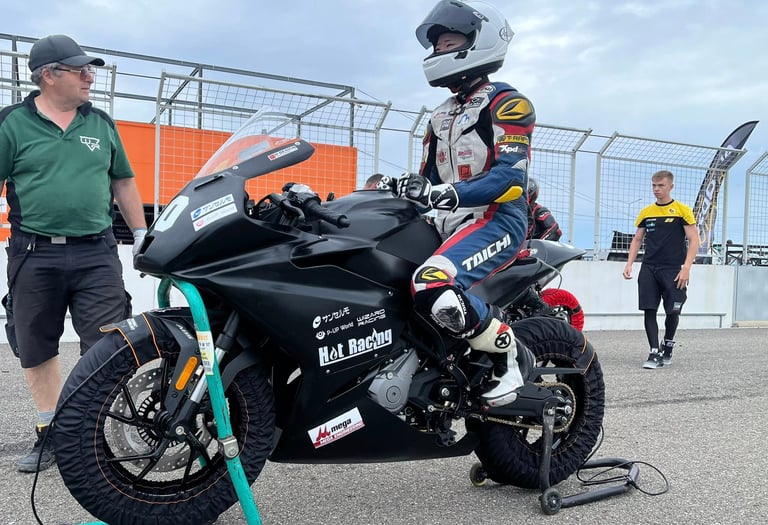
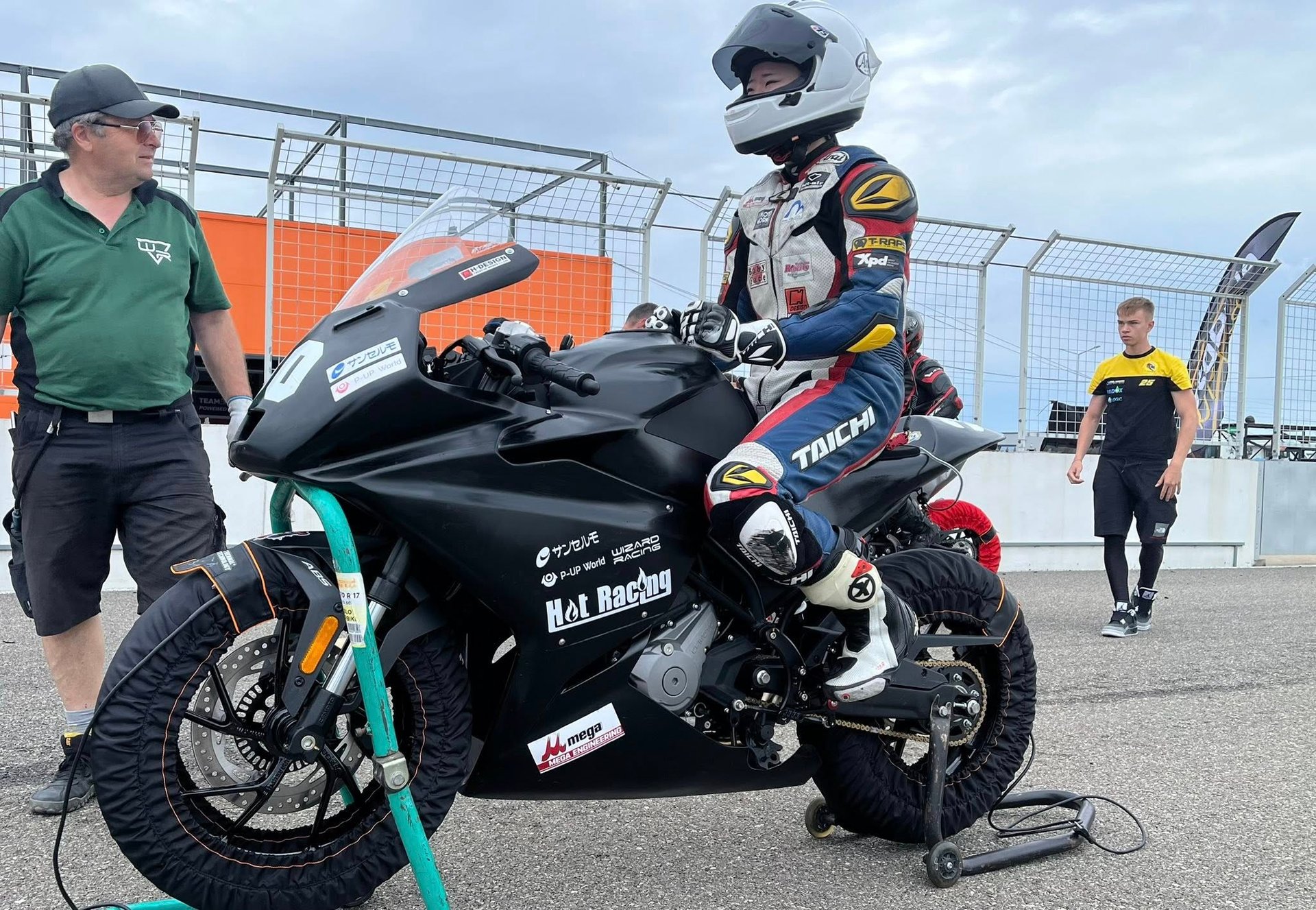
Friday was equally important and introductory in nature. It was the first round of the season, and Sachika needed time to familiarize herself with the circuit, the motorcycle, and the structure of the race weekend. The riding position suited her instantly, and that part was simple — we didn’t change anything.

Long discussions followed between practice sessions with Hikari, in Japanese, in which I had no role. What I did was install a GPS lap timer on the motorcycle, start and download the sessions, and analyze her laps to understand in which corners she could improve her lap time. I would have liked to have more data for comparison from other riders, but it was the first time we had installed such a system on the CFMOTO motorcycle. So, in the end, her own laps became the only reference.

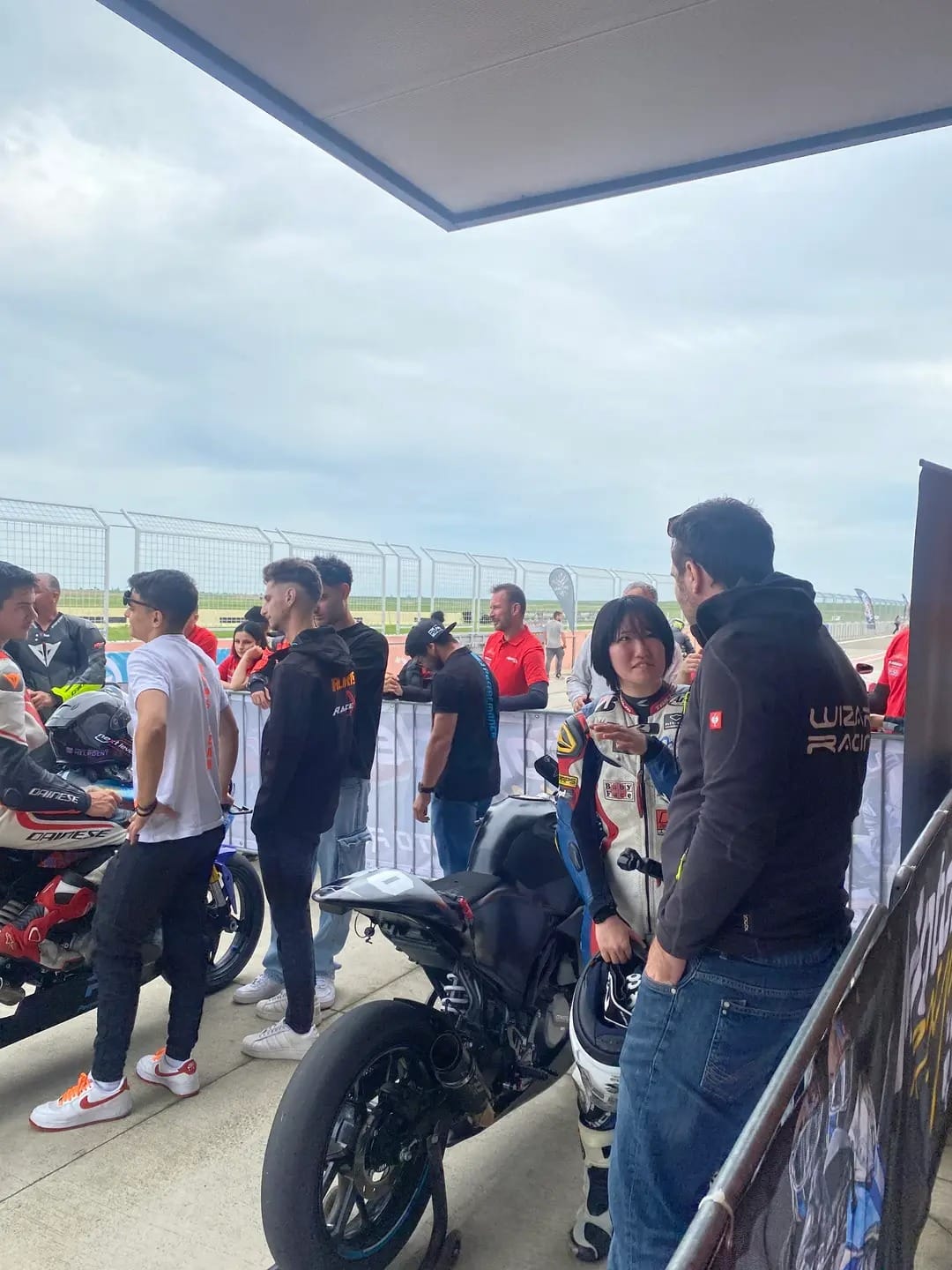
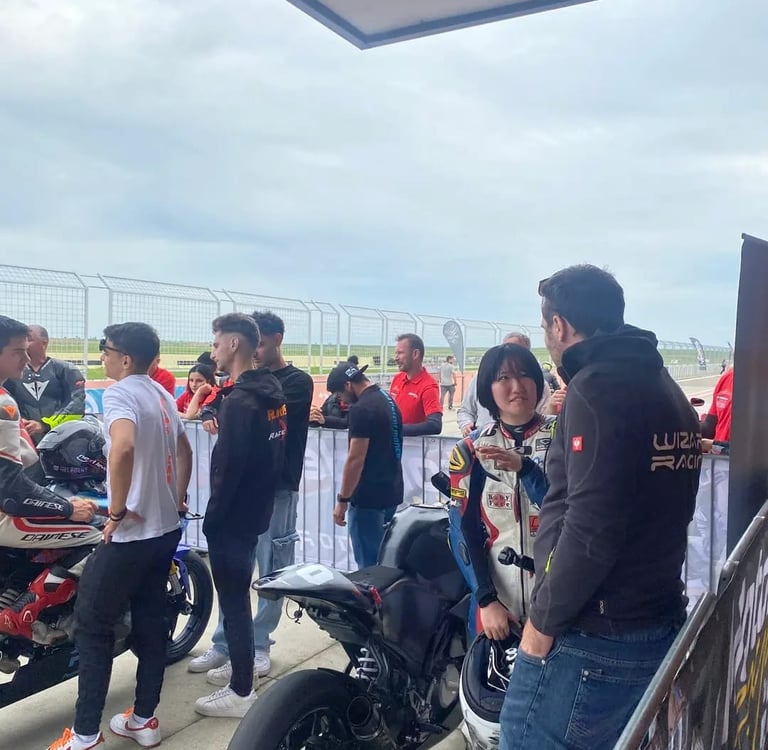
Sachika is the 2021 Japanese 250cc champion, and once the paddock at MotorPark Romania discovered her Instagram account, there was genuine excitement about her participation. She was constantly greeted by smiling faces — people encouraging her or telling her they were impressed by her lap times. Her face would light up, and she thanked everyone with sincere enthusiasm. The rest of the time, if someone had asked me, I would have said her expression reflected curiosity and a desire to absorb this new environment, mixed with a slight impatience. It was clear that before getting on the motorcycle, she didn’t fully know what to expect. I wouldn’t have called it uncertainty. Riders are extremely sensitive to what the motorcycle communicates, to how they learn a circuit or a corner. Still, the positive atmosphere around her seemed to help.

She mentioned that this was her first race participation after quite some time, as this year she had been focused mainly on training, especially on pit bikes. I learned that she was working at an architecture firm, and her colleagues were constantly commenting on posts about her participation. Whenever there was time between sessions, she would draw manga on her tablet. In the evening, we completed the preseason photo session and practiced race starts. At the end of the day, Hikari adjusted the airbag trigger cable to the motorcycle seat. Everything was ready for the two race days ahead.
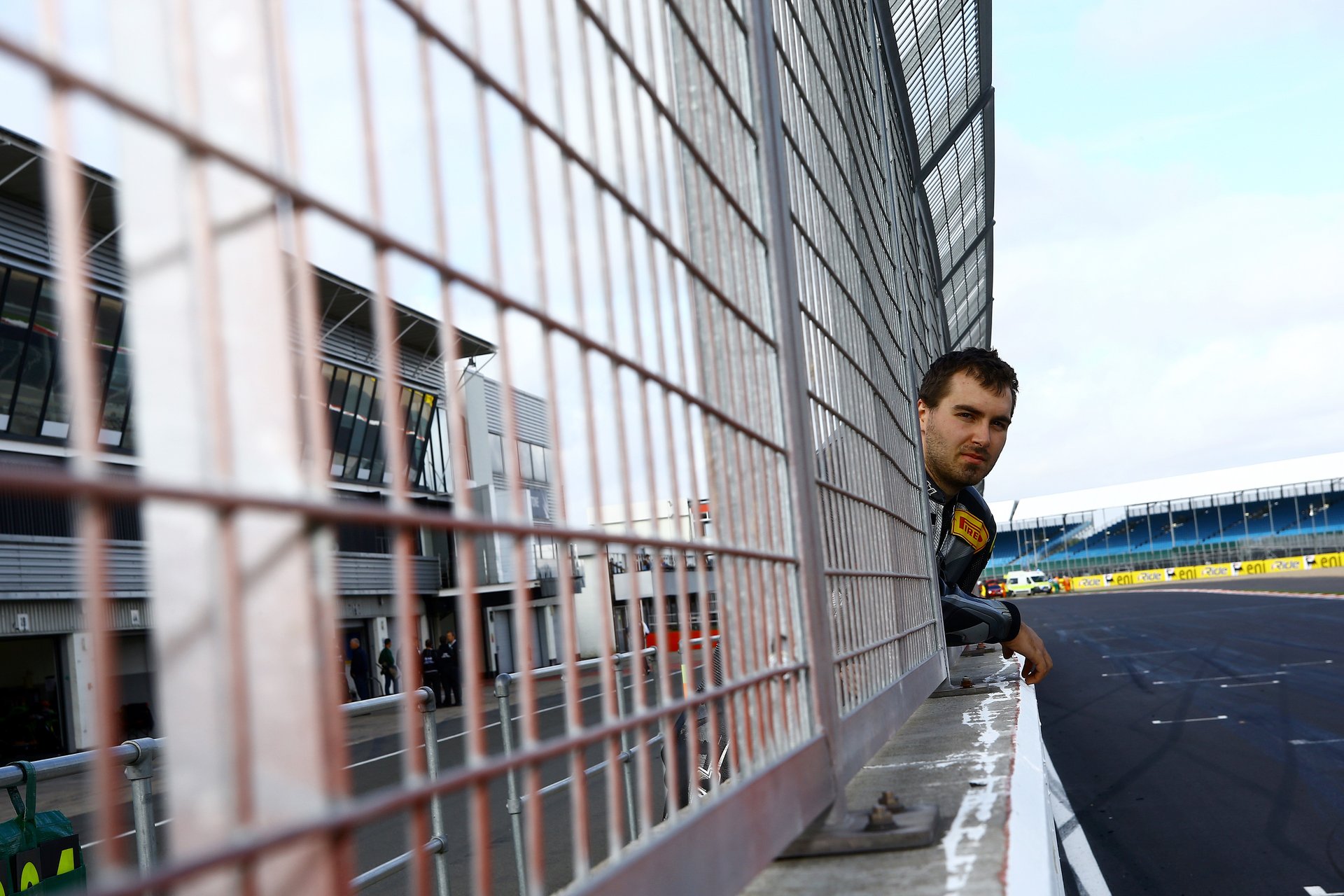
I was at a point where I no longer knew very clearly where things were heading. After every winter, the same question returns, but this time it felt heavier: what comes next for me? The 2023 season in France, alongside Adrien Morillas’ team, had been intense and rewarding, but also more exhausting than what could be seen from the outside. Travel costs, the need to change the motorcycle after the second round, and the persistent pain in my right wrist turned the beginning of 2024 into a period of uncertainty. With only a few successful training sessions and many unanswered questions, I eventually made a decision: in 2025, I would compete in the Romanian National Championship. At the time, I felt it might be my final season.

Amid this emotional uncertainty for me, Hikari Okubo was preparing the HOT RACING project. He had purchased a CFMOTO 300SR and was looking for riders to introduce into a new adventure in Romania, at MotoRC. Time moved so quickly that it felt as if only yesterday we were exchanging messages about the participation requirements for a Japanese rider in Romania; then the entire EWC Team Étoile arrived for training at the practice ground; and suddenly I was on my way to meet Hikari and Sachika at the Bucharest North Train Station, after Sachika Kajiyama had taken her first flight to Europe.

What followed was a race weekend that began perfectly and ended with a light rain starting just moments before the race start — but also with the beginning of an answer to the question that had followed me through the past winters.

Kajiyama arrives in Bucharest

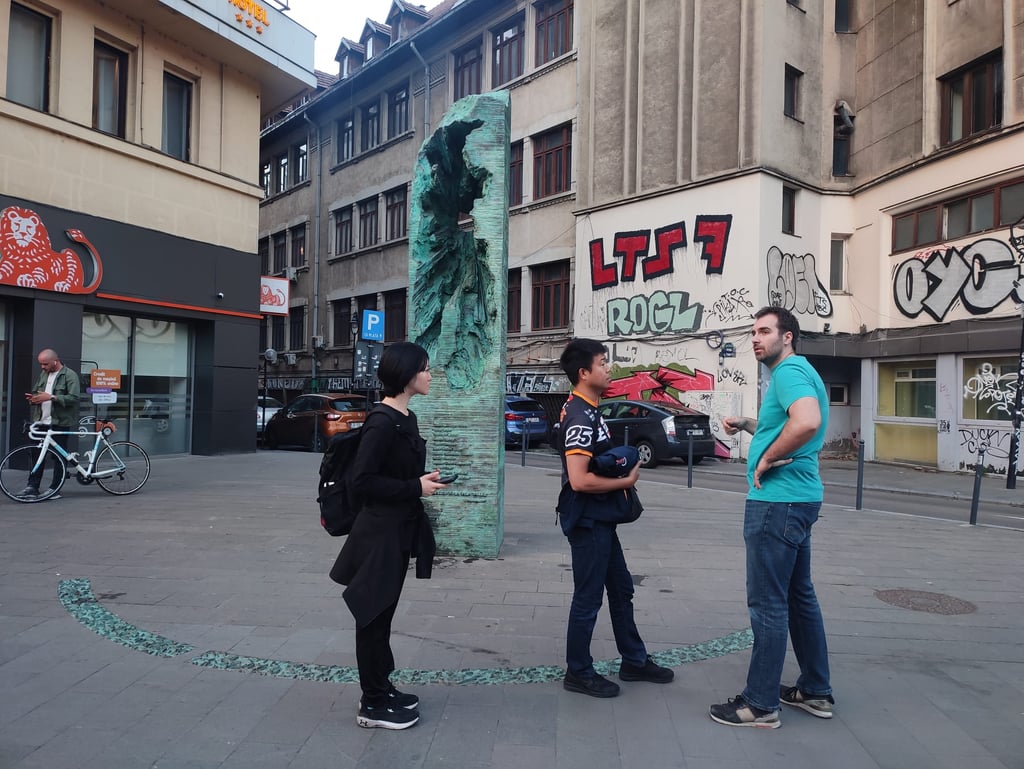
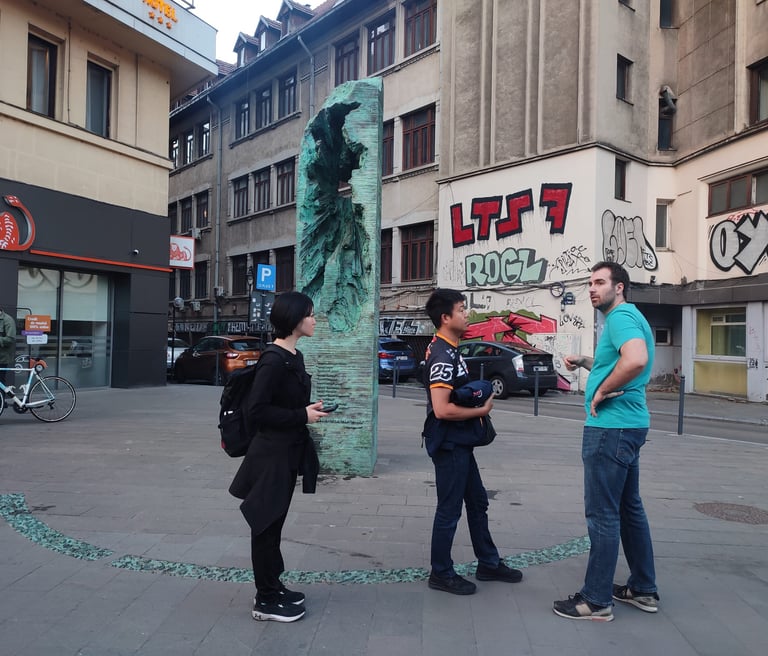
Sachika landed on May 21 after a journey of more than twenty hours by plane, then took the train from the airport to the North Train Station. Personally, knowing that we were leaving for the circuit at six in the morning the next day for the first training session, I would have been overwhelmed by fatigue. Yet Sachika absorbed everything around her, watching the buildings of Bucharest with curiosity. After we arrived home — where the garage held the motorcycle she would race — she immediately wanted to go into the city and explore.

She had a mission from her mother, also a motorcyclist: to buy honey and jam from Romania. I was surprised to learn that in Japan, Romania is seen as a major producer of honey. After walking through the city center, Carol Park, and other places, I asked her on the way back whether she felt tired from the time difference. With an energy straight out of a manga, she said she felt perfectly fine, almost curious about why she wasn’t tired at all. Then she looked at her phone. In Tokyo, it was four in the morning.

The tension of the rain drops

Sunday arrived, but everything around us was wet. During the Warm-Up session, Sachika set the fastest time in the S300 class in wet conditions. One complication, however, began to emerge. Around midday, the asphalt started to dry slightly. As this was our first race weekend in this format, we didn’t have spare wheels, and changing tyres on the rims would have taken at least half an hour, including warming them up.

Le Castellet 2022 — because we only had two sets of wheels, I had to complete the entire qualifying session on intermediate tyres instead of slicks, costing roughly two to three seconds per lap. Le Mans 2023 — in the first race, with the track drying, rain tyres proved to be the right choice. For race two, we switched to slicks, which turned out to be the correct decision (made by Adrien Morillas). Nogaro qualifying — I saw the track drying but chose to go out on rain tyres for a control lap. It only complicated things, because a lap on rain tyres meant nothing if slicks were already usable. I came back in, the mechanics quickly changed the wheels, and I went back out with six minutes remaining. I improved my time, but the suspension setup remained configured for wet conditions, leaving the motorcycle too soft. I was far from pushing, and the result was insufficient. Meanwhile, Hikari Okubo had just come from the 24 Hours of Le Mans, a race with over 150 crashes that his team, Team Étoile, successfully finished.

Given the condition of the asphalt and the relatively low power of the 300cc engines, we agreed that slick tyres would be the best option. During the lunch break, before the race, Hikari and Sachika walked the circuit together. Hikari later called me and asked for the slick tyres to be mounted. The issue remained that we could not change our decision afterward — we simply didn’t have another set of wheels.

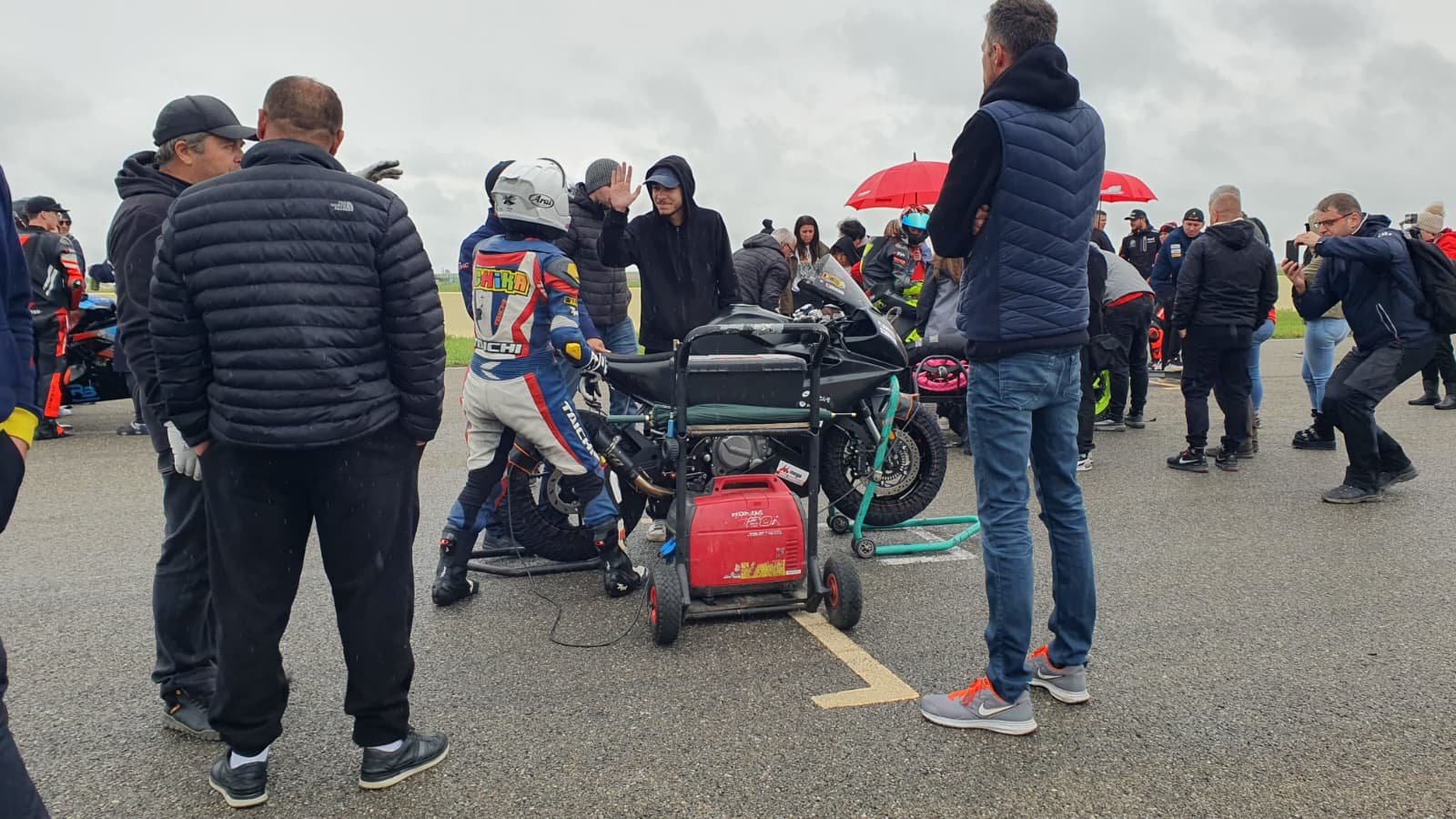
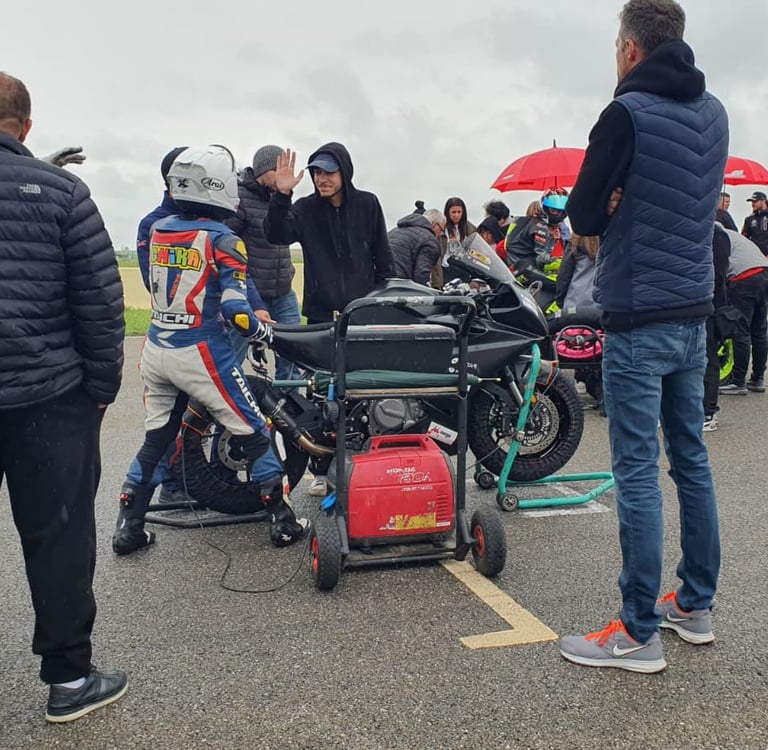
We were called to the grid, and during the 15 minutes of waiting before the start, light rain began to fall. Everything still seemed under control; the drops barely covered the asphalt. Several competitors began changing wheels directly on the grid and mounting rain tyres. Eventually, mechanics and team representatives were required to leave the grid. I walked back toward the pit wall still convinced that those who had switched to rain tyres had reacted too quickly and that, if everything went as expected, we would win the race. The warm-up lap began, and the scattered drops suddenly turned into a spring rain that lasted exactly two minutes.

Sachika returned to the grid and looked toward the pits, knowing she did not have the right tyres on the motorcycle. From the moment she looked toward us, I could no longer watch the race.

Instead, I focused on the live timing screen, writing down what I needed in my notes while replaying every decision we had made before the race. Somehow, Sachika managed to stay for ten laps in a group fighting for third place. The others were on rain tyres; she was on slicks. In the end, she finished the race safely — on the podium, in third place.

I kept thinking about the moment the rain started and how we had no possibility to change the wheels on the spot. It wasn’t a bad result, and our rider had done an excellent job, yet I couldn’t stop thinking that she deserved a real chance to fight for the win, especially since she would be leaving for home the next day.

Those thoughts were interrupted by Hikari, who suggested a game of rock–paper–scissors between the three of us. The loser had to buy ice cream for everyone. Hikari lost, and the atmosphere finally relaxed — just like at the end of a race weekend

A meaning beyond the race track

The following day, we took one last walk — visiting a bookstore, stopping by the ice rink, sharing a meal together — before I accompanied them to the train station for their journey to the airport. My attention soon shifted toward my next race, yet Sachika Kajiyama’s effort to come all the way to Romania kept making me reflect on things beyond our control. I had gone through a season marked by wrist pain, frustrated by the many challenges that come with a rider’s life, and now, every time I got on the motorcycle, I no longer felt truly comfortable.

After my two races that weekend, sitting in the hotel in the evening, I kept repeating the same thought to myself: instead of getting on the motorcycle and feeling like this, instead of spending money just to continue that struggle, maybe it would make more sense to use those resources to bring Sachika back to race again. That was the moment I realized I had stopped thinking only as a rider — the moment when the question that returned every winter finally began to reveal its answer.

Just say - It was a nice race, I enjoyed it very much, I like this track, thank you so much...
A flawless Sprint race

Usually, the drive to the circuit on Saturday feels more relaxed. The Friday morning traffic across Bucharest is behind us, along with the start-of-round obligations — registrations, administrative tasks, and everything that comes with the opening day. On Saturday we wake up a little later, and you can feel the difference. Everyone in the team knows better what needs to be done, and the focus shifts toward the highlight of the day — the Sprint race.

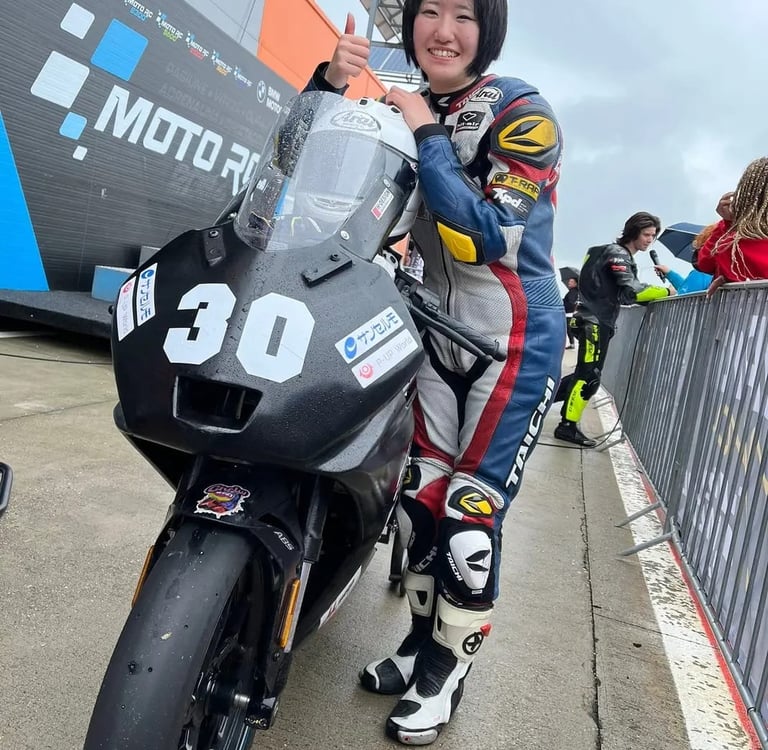
The S300 race is five laps long. It is the rider’s first real opportunity to run among competitors, read the race dynamics, and understand where overtaking opportunities might appear. Sachika didn’t have the best start. During the race, she was still in the discovery phase. Five tense laps followed, with the CFMOTO riders grouped in a tight pack. Sachika remained consistently involved in the battle, and just when it seemed the race leader might pull away toward the end, she closed the gap and made a decisive overtake in the very last corner.

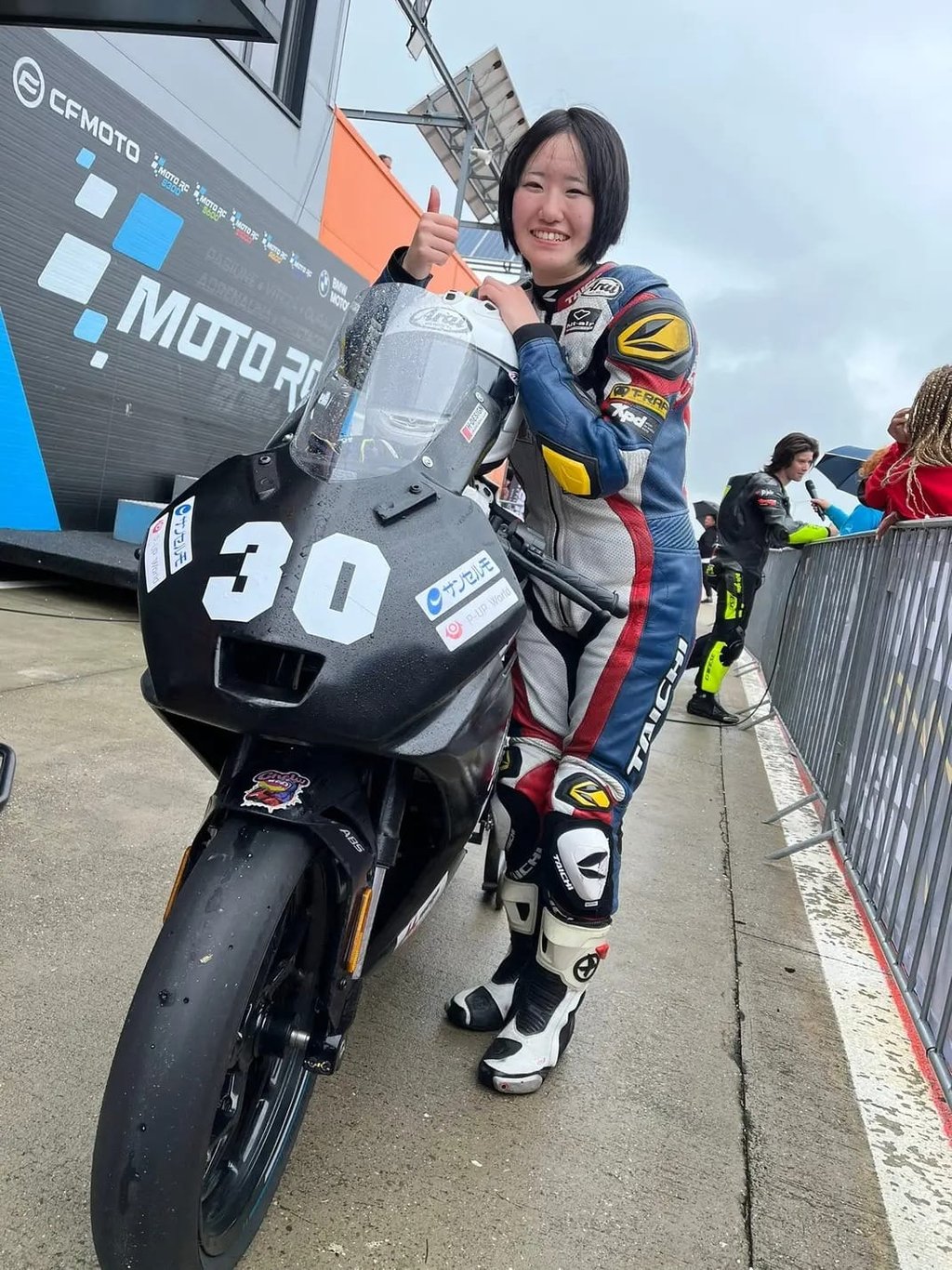
Victory in the Sprint race for Sachika Kajiyama!

It was a joyful moment for the HOT RACING team, and we waited for Sachika in parc fermé. She arrived, removed her helmet, and with a calm smile began thanking the people around her as they applauded and congratulated her. She was then called for an interview, and her gaze turned toward me, slightly anxious that she might struggle in English. That concern was simply part of her personality, because after the entire weekend together I can say her English skills were more than sufficient. In five seconds, I reassured her with a quick example of a universal motorcycle racing interview answer: It was a nice race, I enjoyed it very much, I like this track, thank you so much… The real interview turned out to be more complex and completely problem-free. Those few words probably helped only with taking the first step toward the microphone.

On Saturday evening, we went out for ice cream. Sachika said she wanted to eat it every day!

ありがとうございました。

Follow HOT RACING